Completion Certificate (CC) in Real Estate Explained for Buyers and Developers
Apr 15, 2026
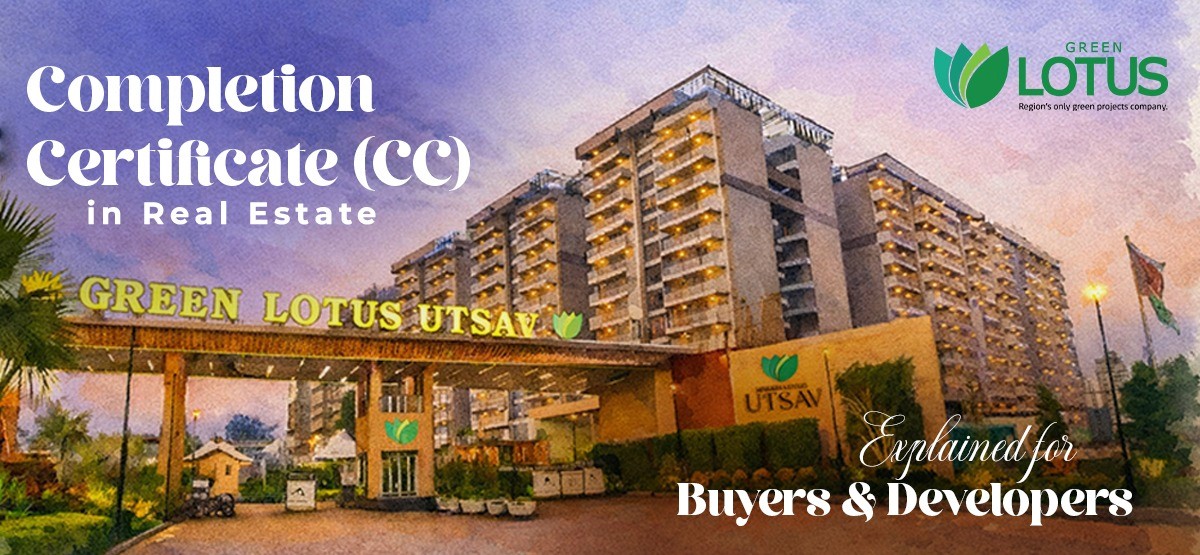

A Completion Certificate is one of the most important documents in any real estate transaction - yet most buyers never ask for it. If you're purchasing a flat, plot, or commercial space in India, understanding the Completion Certificate can save you from legal trouble, blocked loans, and unsafe living conditions.
Here's everything you need to know, straight to the point.
What Is a Completion Certificate in Real Estate?
A Completion Certificate (CC) is an official document issued by the local municipal authority - such as a Municipal Corporation, Development Authority, or Panchayat - confirming that a building has been constructed in accordance with the approved building plan, local bylaws, and safety norms.
In simple terms, it's the government's stamp that says, "This building was built legally and correctly."
It is issued only after construction is fully complete and after inspectors verify that the structure matches what was originally sanctioned.
Completion Certificate vs Occupancy Certificate - Are They the Same?
No, and this is where most buyers get confused.
The Completion Certificate confirms that construction is done and matches the approved plan. The Occupancy Certificate (OC), on the other hand, confirms that the building is safe to live in - it covers sanitation, fire safety, water supply, and structural stability.
In many states, the OC is issued after the CC. Some states combine both into a single document. Either way, you need both before moving in. Always ask your developer for both, not just one.
Who Issues the Completion Certificate?
The CC is issued by the local body that has jurisdiction over the construction site. Depending on the location, this could be:
Municipal Corporation (for urban areas)
Town and Country Planning Department
Development Authorities like GMADA, HRERA, or similar bodies in different states
Gram Panchayat (for properties on the outskirts)
In the Tricity region - Chandigarh, Panchkula, and Mohali - the issuing authority will typically be GMADA (Greater Mohali Area Development Authority) or the respective municipal bodies.
Why Is the Completion Certificate Important for Buyers?
This is not just paperwork. Here's what's actually at stake:
Home Loan Approval: Banks and NBFCs in India require the Completion Certificate before releasing the final installment of a home loan. Without it, your loan disbursement can be stalled.
Legal Ownership: Registering your property and getting a clear title can become complicated if the CC is missing. Some states legally bar residents from moving into a building without it.
Resale Value: A property without a CC is difficult to sell in the secondary market. Future buyers will face the same documentation issues you skipped over.
Utility Connections: In many cities, permanent water and electricity connections are not sanctioned without a valid CC or OC.
Safety Assurance: The CC confirms that the building met structural and safety codes during construction. It protects you from occupying a building with potential violations.
How to Check If a Project Has a Completion Certificate
You don't have to take the developer's word for it. Here's how to verify:
First, ask the developer directly for a copy of the CC and cross-check the document number with the issuing authority. Second, in states with RERA registration, you can visit the state's RERA portal - project documents, including certificates, are often uploaded there. Third, you can file an RTI (Right to Information) request with the local authority if you want official confirmation.
If a developer tells you the CC is "in process" or "applied for," treat that as a red flag. Move-in should not happen before this document is in hand.
What Happens If a Building Doesn't Have a Completion Certificate?
Buying a property without a CC carries serious risks. The municipal authority has the legal right to declare such a building illegal, impose heavy fines, or, in extreme cases, order demolition of unauthorized structures or additions. Residents can also face difficulties with insurance claims if the building's legal status is in question.
In a market where fly-by-night developers and unauthorized construction are real concerns, this is not a document to overlook.
How Green Lotus Handles It
When you're investing in a city like Zirakpur - one of the fastest-growing real estate corridors in North India - this kind of legal compliance should be non-negotiable.
Green Lotus projects are built around this principle. Green Lotus Utsav on PR7 Airport Road holds IGBC Platinum certification - the highest green building rating in India - which inherently demands full regulatory compliance at every stage of construction. Green Lotus Saksham on Patiala Highway is a ready-to-move-in society, meaning buyers can verify the legal status of the project before committing.
Green Lotus Avenue, their earliest project along the Zirakpur-Ambala Highway, is already occupied and well-established - making it one of the most legally vetted addresses in Tricity.
For buyers in the Chandigarh-Mohali-Panchkula region, choosing a developer that builds to certified standards isn't just a lifestyle preference - it's a layer of legal protection.
Quick Summary
A Completion Certificate confirms that a building is constructed as per the approved plan and local laws. It is issued by the municipal authority. Without it, banks won't disburse final loan amounts, utility connections get held up, and your property's resale value takes a hit. Always ask for it - and verify it - before signing.
If you're exploring homes in Tricity and want to know more about legally compliant, certified green housing options, Green Lotus projects are worth a serious look.
© 2025 Green Lotus Group. All rights reserved.